Written by Blake Hickey | Clinically reviewed by Dr. Marissa Cooper, DMD, MS | Last reviewed September 25, 2026
The Short Answer
Braces for teens use brackets and wires that put pressure on the teeth to gradually move them into better positions, according to the American Association of Orthodontists [1]. Most teens follow a similar path: choosing the right type of braces, about an hour to place them, a few tender days, regular adjustments and a retainer at the end.
Braces can feel like a big step, especially for a teen who has never had orthodontic treatment. But getting braces does not mean putting sports, music or school on hold, and much of the process is simpler than families expect.
The goal of this guide is to walk you through each stage, from the first plan to the final retainer, so your teen knows what is coming and your family can plan with confidence.
If your child is younger, start with our guide on when a child should see an orthodontist.

How Does Dr. Cooper Plan Braces for a Teen?
At Orthodontics of Weston, Dr. Cooper begins with the end in mind. Before recommending any type of braces, she plans how your teen's teeth will move and how the finished smile will be created. The braces come after the plan, not before it.
That plan is written out, step by step, before treatment begins. Dr. Cooper types it up herself and compares it to a cookbook, from start to finish.
"Dentistry should be predictable. You should be able to go in knowing, step by step, what your child is having done from start to finish."
Dr. Marissa Cooper, DMD, MS
She also coordinates with your teen's dentist. When a case calls for it, she works with other professionals, such as oral surgeons, speech therapists and myofunctional therapists, so everyone caring for your teen is working toward the same goal.
A clear plan gives families something just as valuable as the treatment itself: knowing what comes next.

How Do Braces Move Teeth?
Braces move teeth through a natural process called bone remodeling. According to the AAO, pressure on a tooth creates compression on one side of the root and tension on the other. The body removes bone where there is compression and forms new bone where there is tension, allowing the tooth to move gradually into its new position [2].
That process has its own pace. Dr. Cooper explains that teeth move only a certain number of millimeters a month, whether a teen is wearing braces or Invisalign (clear aligners). It comes down to force and duration.
This is why each movement is planned so carefully. The aim is to move teeth at the pace their biology allows while protecting the teeth and gums along the way.

Which Type of Braces Is Right for a Teen?
The right option depends on your teen's diagnosis, bite and daily habits. The AAO describes types of braces, including traditional metal braces and ceramic braces with tooth-colored or clear brackets [1].
Options for teens may include:
- Metal braces, the traditional option, with small ties that hold the wire in place
- Ceramic braces, a tooth-colored option made from a non-porous material that, in Dr. Cooper's experience, does not stain
- Clear aligners, removable trays that move teeth only while they are worn

Some families have heard that clear braces turn yellow. Dr. Cooper explains that the yellowing many people picture comes from plastic brackets, which are porous and can stain the same way a plastic container does after tomato sauce is heated in it. That is why the material matters.
The small ties that hold the wire are a different story. Clear ties can pick up color from foods such as curry or turmeric, so some teens choose silver or a color that is less prone to staining. Ties are changed at each adjustment visit, and if a big event is coming up, families can come in to have them changed sooner.
Daily habits can also help guide the choice:
- Braces may be easier for a teen who sips coffee or tea or snacks throughout the day, because aligners need to be worn about 22 hours a day and come out for anything other than water
- Aligners may be easier for a teen who plays a contact sport or does a lot of public speaking
Dr. Cooper also cautions that eating or sipping with aligners in place can trap sugars and bacteria against the teeth. And because aligner trays are manufactured and shipped, treatment with aligners typically takes about as long as treatment with braces, and often a few months longer.
"The modality, whether it's Invisalign or braces, is the tool I use to move your teeth. It's just a tool."
Dr. Marissa Cooper, DMD, MS
Families can compare options on the practice's types of braces page. The final recommendation comes after Dr. Cooper has evaluated your teen, because the right tool depends on the plan.
What Happens the Day Braces Go On?
The appointment is often shorter than families expect, because much of the detailed work happens beforehand.
Orthodontics of Weston uses a technique called indirect bonding. Before the visit, Dr. Cooper personally positions each bracket in a custom tray made for your teen. At the appointment, the tray places all of the brackets on the teeth at once. Your teen's mouth is open for about five minutes, and the full appointment takes about an hour. It does not require anesthesia or sedation. Dr. Cooper compares it to putting on stickers.
Placing every bracket in a single visit also helps treatment be, in Dr. Cooper's words, "as mechanically efficient as possible."
A few steps help the day go smoothly:
- A dental clearance. With your permission, the team usually contacts your teen's dentist ahead of time to confirm there is no decay or gum concern.
- Well-timed cleanings. A cleaning right before the bonding appointment is best avoided, because fluoride on the teeth can keep brackets from bonding well. A cleaning a few days or weeks earlier works well.
- A fresh polish. The teeth are polished in the office before the brackets are placed.
Do Braces Hurt?
Teeth often feel tender after braces are placed and after adjustments. According to the AAO, the discomfort is relatively mild and manageable for most people. It is usually strongest in the first 24 to 48 hours and typically fades after a few days [3].
Dr. Cooper compares the feeling to the first time at the gym, when muscles that have never moved that way feel sore for a few days. Placing braces involves no needles and nothing sharp. As she puts it, "Are you going to feel a little tender? Sure."
During those first few days, it may help to:
- Choose soft foods that are easy to chew
- Sip cold water or another cold drink
- Hold a cold compress against the outside of the cheeks [3]
- Take an over-the-counter pain reliever, if your teen has no allergy to it [3]
Check with your teen's pediatrician or pharmacist about the right product and dose before giving any pain reliever.
And there is one prescription teens tend to like. Dr. Cooper tells them she prescribes ice cream for the first few days.
What If My Teen Is Nervous About Braces?
Feeling nervous is normal, and your teen is in good company. As Dr. Cooper reminds families, it is everyone's first time.
The team includes assistants who have spent 20 to 30 years working with children, and many are parents themselves. They know how to walk a hesitant teen through each step.
"I'm a professional worrier, so I will worry for you. We guide them through every step of the way."
Dr. Marissa Cooper, DMD, MS
The written plan helps here, too. Because each step is mapped out ahead of time, parents can tell their teen what will happen at each visit and what comes next. The goal is no surprises.
What Can a Teen Eat With Braces?
After the first few tender days, teens can still enjoy many of the foods they love. The AAO's guide to eating with braces lists braces-friendly choices such as scrambled eggs, pasta, soup, seafood, mashed potatoes, soft-crust pizza, soft cheeses, bananas, berries, yogurt, chocolate and ice cream [4].
The foods to avoid are hard, sticky or difficult to bite into. A broken bracket or loose wire can set treatment back [4]. Foods to avoid include:
- Hard candy, ice and nuts
- Sticky candy, such as taffy and caramel
- Chips, pretzels and hard pizza crust
- Bagels and chewy meat
- Popcorn

Each wire is set in a precise position to guide the teeth toward their planned positions. Dr. Cooper explains that biting into something hard or sticky can create tiny movements in the wire, and those movements can nudge teeth away from where she planned, which delays treatment.
"We're not saying this for us. We're actually saying this for you."
Dr. Marissa Cooper, DMD, MS
Popcorn is on the list for another reason. Its thin hull can get stuck between the gum and a tooth, and with braces in the way, it can be very hard to get out, which may lead to an infection.
Food is only part of the picture. Dr. Cooper says most of the broken braces she sees come from habits rather than food, such as:
- Biting fingernails
- Chewing on hard reusable straws
- Chewing on hoodie strings
As she likes to remind teens, teeth are not tools.
How Should a Teen Care for Braces?
Caring for braces takes a few extra minutes a day, and those minutes matter. The AAO recommends brushing for two minutes after every meal or snack and before bed, and flossing at least once a day [5].
A daily routine may include:
- Brushing around each bracket and along the gumline
- Cleaning between the teeth
- Using a water flosser, which Dr. Cooper describes as a pressure washer for the teeth
- Saving the longer brushing and flossing routine for bedtime, so school mornings stay calm
- Putting screens away and using the mirror, so teens can see the areas they tend to miss
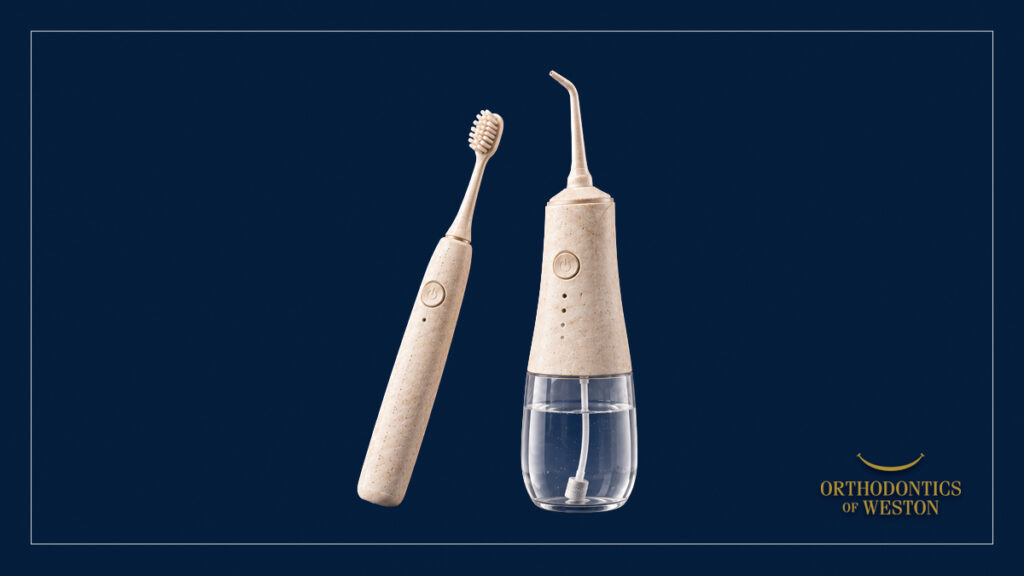
Clean teeth matter for more than appearance. Dr. Cooper explains that healthy teeth move faster, because the body has to fight infection before it can move teeth. Healthy, pink gums also make a visible difference in the finished smile. For that reason, she typically suggests three dental cleanings a year during treatment instead of two.
Your family will not be figuring this out alone. At the first visit, families receive a bag of the supplies they will need, and the practice offers videos on brushing, flossing and water flossing with braces. Oral hygiene is checked at every appointment, and the team will point out any areas that need more attention. The practice's life with braces page has more tips.
What If a Bracket Breaks or a Wire Pokes?
It happens. Dr. Cooper notes that many of these problems can be managed at home until the office can see your teen.
If something breaks, it can help to:
- Cover a loose bracket or poking wire with a small piece of orthodontic wax, which the AAO notes can make it more comfortable [6]
- Watch the practice's video guides for simple fixes
- Call the office as soon as possible, so the team can advise how soon your teen should come in [6]
- Keep fingers out of the mouth
In Dr. Cooper's experience, a bracket that comes off on a Saturday and is repaired later that week usually does not set treatment back. When a bracket or wire stays out of position for weeks, however, a tooth can move in the wrong direction, and it takes time to bring that tooth back onto its path.
That is one more reason the mirror matters. A quick look while brushing can help your teen notice a bracket that seems out of place before it becomes a bigger delay.

What Do Rubber Bands Do?
Rubber bands, also called elastics, help correct how the teeth fit together when your teen bites. Dr. Cooper explains that braces and aligners straighten, align and level the teeth, while rubber bands or other appliances usually correct how the top and bottom teeth line up, such as upper front teeth that sit too far ahead of the lower front teeth.
Most teens do not start rubber bands on the first day. Many begin about a third of the way into treatment, and how long they are needed depends on the bite and on how consistently they are worn. As Dr. Cooper often says, everyone is an individual.
New rubber bands may feel strange and a little tender for a few days, but teens get used to them with practice, and they should not require missing school.
Wearing extra rubber bands will not speed things up. Orthodontists select force levels based on the specific tooth movement needed, and as Dr. Cooper puts it, "overpowering the system is actually not going to help the system." Steady, everyday wear is what helps, and wearing them only in the weeks before an appointment usually shows at the next visit.

Can My Teen Play Sports or an Instrument With Braces?
Yes. Braces do not have to put sports, music or performances on hold.
For sports, the AAO describes mouthguards as a wise addition to protective gear and notes that they are particularly important for people in orthodontic treatment [7].
For Weston families balancing school, sports and activities, timing matters, too. The treatment coordinators can plan appointments so braces are not placed the day before a recital or a big presentation, giving your teen time to get used to them. The practice treats musicians, singers, actors and athletes, and a little planning ahead helps them keep doing what they love.
How Long Do Braces Take for Teens?
Braces take as long as each individual case needs. According to the AAO, most people have braces for 12 to 24 months, with shorter treatment possible for minor corrections and longer treatment for more complex cases [1].
A teen's timeline depends on how far the teeth need to move, whether the bite needs correcting and daily habits such as rubber band wear, cleaning and keeping appointments. Dr. Cooper's estimate of treatment time is based on how quickly your teen's teeth can move efficiently and safely.
"Everybody's treatment is a different time, and that's how it should be."
Dr. Marissa Cooper, DMD, MS
If the teeth move faster than expected, that is good news. As Dr. Cooper says, "No one's ever been mad when the plane lands earlier than expected."
What Happens When Braces Come Off?
The day braces come off is a big one, and it is often quicker than families expect. Specialized tools remove the brackets, the remaining bonding material is polished away and the appointment takes about an hour.
That same day, the retention phase begins. The AAO explains that teeth naturally move throughout life and can continue to shift after orthodontic treatment, which is why retainers matter [8]. At Orthodontics of Weston, treatment plans include a set of retainers and two years of follow-up visits to check them.
The practice's typical approach is a bonded retainer, fixed behind the lower front teeth, and a removable retainer for the upper teeth. Families often ask why the upper retainer is not bonded, too. Dr. Cooper gives two reasons:
- The bite. A bonded retainer would sit behind the upper front teeth, where the lower teeth could knock it off when your teen bites down.
- The width of the smile. A bonded retainer holds only the front teeth it touches, and jaws tend to narrow with age. A removable retainer in the roof of the mouth helps maintain the width of the whole smile.
The typical routine is two weeks of full-time wear, followed by nights only. In Dr. Cooper's words, it "couldn't be simpler."
Dr. Cooper's goal is to reach the finish line as efficiently and safely as your teen's teeth allow, with no more time in braces than needed, and then help your teen protect the smile they worked hard for.
Frequently Asked Questions
Can my teen chew gum with braces?
No. Gum is sticky enough to shift the wire out of position. That can leave teeth sore, may require an extra visit to reposition the wire and can cost time in treatment.
Can my teen choose the colors on their braces?
Yes. Teens can choose from many colors, or keep things subtle with silver. Adults sometimes ask for colors, too.
Do ceramic braces take longer or hurt more than metal braces?
In Dr. Cooper's experience, no. She finds that ceramic braces work as efficiently as metal braces, with no noticeable difference in how they feel or how long treatment takes.
Will braces make my teen miss a lot of school?
Not usually. Adjustment visits are typically about every eight weeks, routine appointments are often scheduled after school and some can be planned for summer. The office also provides school notes before and after appointments.
Where can my teen get braces in Weston, Florida?
Orthodontics of Weston is located at 1600 Town Center Blvd, Suite A, in Weston, Florida. Scheduling options for teens are listed below.

Schedule a Braces Consultation for Your Teen in Weston, Florida
If your teen has most or all of their permanent teeth, has been told they may need braces or has a bite concern, a consultation with Dr. Cooper can provide clarity about the options and what treatment would involve.
Orthodontics of Weston offers consultation times designed to work with school and family schedules, including select after-school, late-afternoon, half-day and school-holiday availability.
Request an appointment online or call (954) 389-1002.
Orthodontics of Weston proudly serves children, teens and families throughout Weston and Broward County.

Written by Blake Hickey
Blake manages marketing for Orthodontics of Weston. He has been a patient at different practices across the country over the years, going through expanders and braces as a kid, along with jaw surgery, aligners and retainers in his 30s. Because he is not an orthodontist, he sits down with Dr. Cooper to ask the questions he once had and that real patients ask today, then writes up what he learns to make treatment easier for families to understand.

Clinical review by Dr. Marissa Cooper, DMD, MS
Dr. Marissa Cooper is the owner and orthodontist at Orthodontics of Weston. She joined the practice in 2013 and is now its owner, and the practice has served South Florida families since 1989. She earned her Doctor of Dental Medicine from the University of Florida College of Dentistry and completed her orthodontic certificate and Master of Science at Nova Southeastern University. She is a member of the American Association of Orthodontists.
Learn more about Dr. Marissa Cooper
This article is for informational purposes only and does not constitute medical advice or a doctor-patient relationship. Schedule an evaluation with a licensed orthodontist for individual care.
Sources
- American Association of Orthodontists. Braces.
- American Association of Orthodontists. How Do Braces Work? Navigating Orthodontic Treatment with Braces.
- American Association of Orthodontists. Do Braces Hurt? Your Comprehensive Guide to Managing Orthodontic Pain.
- American Association of Orthodontists. What Can I Eat with Braces? A Comprehensive Guide.
- American Association of Orthodontists. Living With Braces: The Brace-Faced Adventure.
- American Association of Orthodontists. What Is an Orthodontic Emergency and How Do You Handle Them?
- American Association of Orthodontists. Orthodontic Mouthguards: Sports Protection for Braces.
- American Association of Orthodontists. Are Retainers Necessary After Orthodontic Treatment?